
How to Winterize Your Outdoor Faucets in Calgary
The ten-minute fall job that stops a pipe splitting inside your wall, and how to tell if yours already froze.

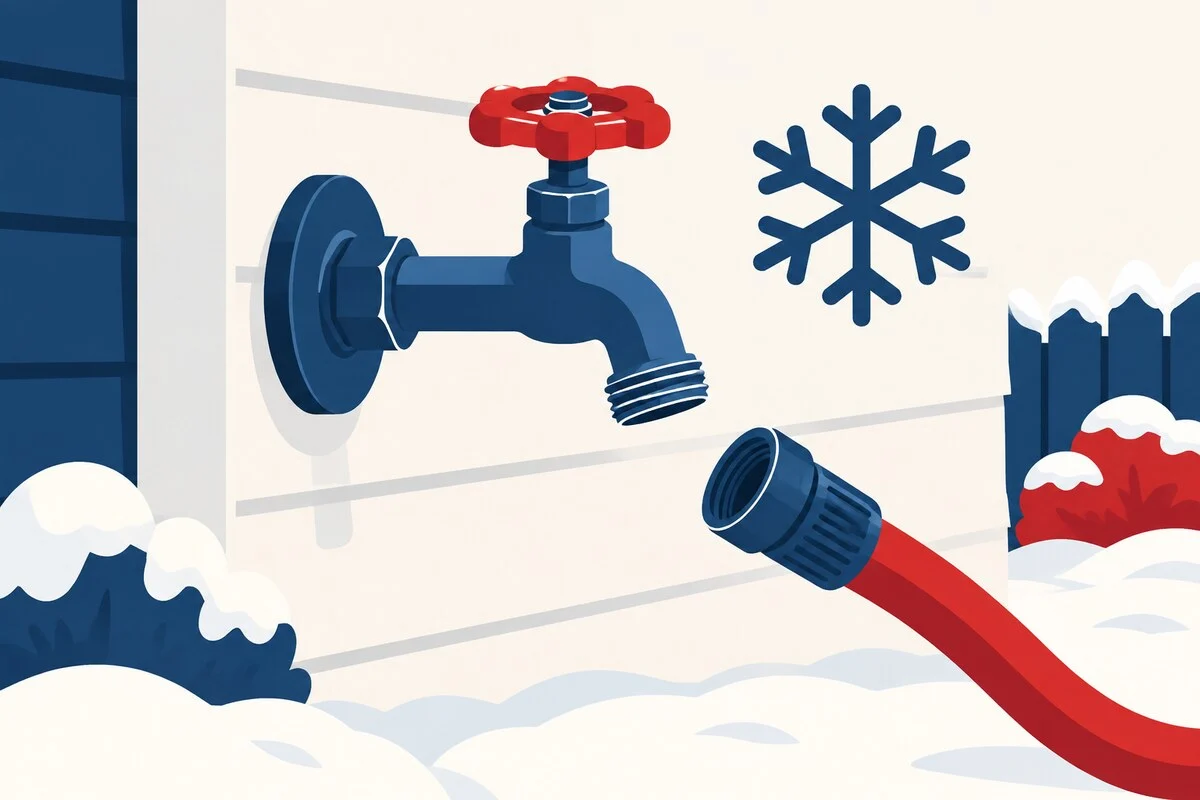
An outdoor tap that is not shut down for winter can freeze and split inside the wall, where you cannot see it. Nothing happens until spring, when someone turns on the hose and the water runs into the basement instead of the garden. Winterizing takes about ten minutes. Calgary can see a hard freeze any time from late September, so if it is not done yet, do it this weekend.
First, figure out which kind you have
Frost-free tap. Common in newer Calgary homes. The actual valve sits several inches back inside the heated wall, and the tap drains itself when you shut it off. That only works if nothing is attached to it.
Standard tap with an inside shut-off. Common in older homes. The outdoor tap has its own shut-off valve inside the house, usually in the basement ceiling or wall right behind where the tap comes through.
Not sure? Look in the basement directly behind the outdoor tap. If there is a small valve on the line feeding it, close it either way.
Winterizing a frost-free tap
- Disconnect the hose, plus any splitter, timer or quick-connect fitting. This is the step people miss. A hose left on traps water in the valve body, and it freezes anyway.
- Turn the tap off.
- Drain the hose and store it somewhere it will not crack.
Winterizing a standard tap
- Disconnect the hose and anything attached to the tap.
- Close the inside shut-off valve.
- Open the outdoor tap and let the line drain. Leave it open all winter so any water left in the line has room to expand.
- If the inside valve has a small bleed cap on its side, open it over a bucket to drain the last of the water, then close it again.
Extras worth doing
- Foam tap covers from the hardware store add a layer of protection, but they do not replace shutting the line down.
- Underground sprinkler systems need to be blown out with compressed air before freeze-up.
- Taps over an unheated garage or crawlspace are higher risk. Insulate the supply line where you can reach it. Our frozen pipes guide covers the rest of the house.
How to tell if it already froze
The first time you turn the tap on in spring, have someone stand in the basement behind it. Warning signs:
- Weak flow or a sputter at the tap
- Water dripping or spraying inside the wall or ceiling
- A damp patch on the basement wall or ceiling behind the tap
If you see any of it, shut the water off and call. A split tap is a quick replacement, and catching it in the first minute saves the drywall.
Common questions
Do frost-free taps need winterizing?
Yes, in one way: the hose has to come off. With a hose attached, water cannot drain out of the valve body, and it can freeze and split inside the wall.
Should the outside tap be left open or closed for winter?
For a standard tap, close the inside valve and leave the outdoor tap open. For a frost-free tap, remove the hose and close the tap.
Can an old tap be replaced with a frost-free one?
Yes. It is a common, quick job, and it takes one step out of your fall routine for good.

Ready when you are.
Tell us what is going on and the Northern Flame team will get back to you within one business day.
Get a Free Quote