
Why Is My Drain Slow? Causes and Fixes for Calgary Homes
Grease, roots or a collapsed line. Why guessing costs you twice, and when a camera earns its keep.
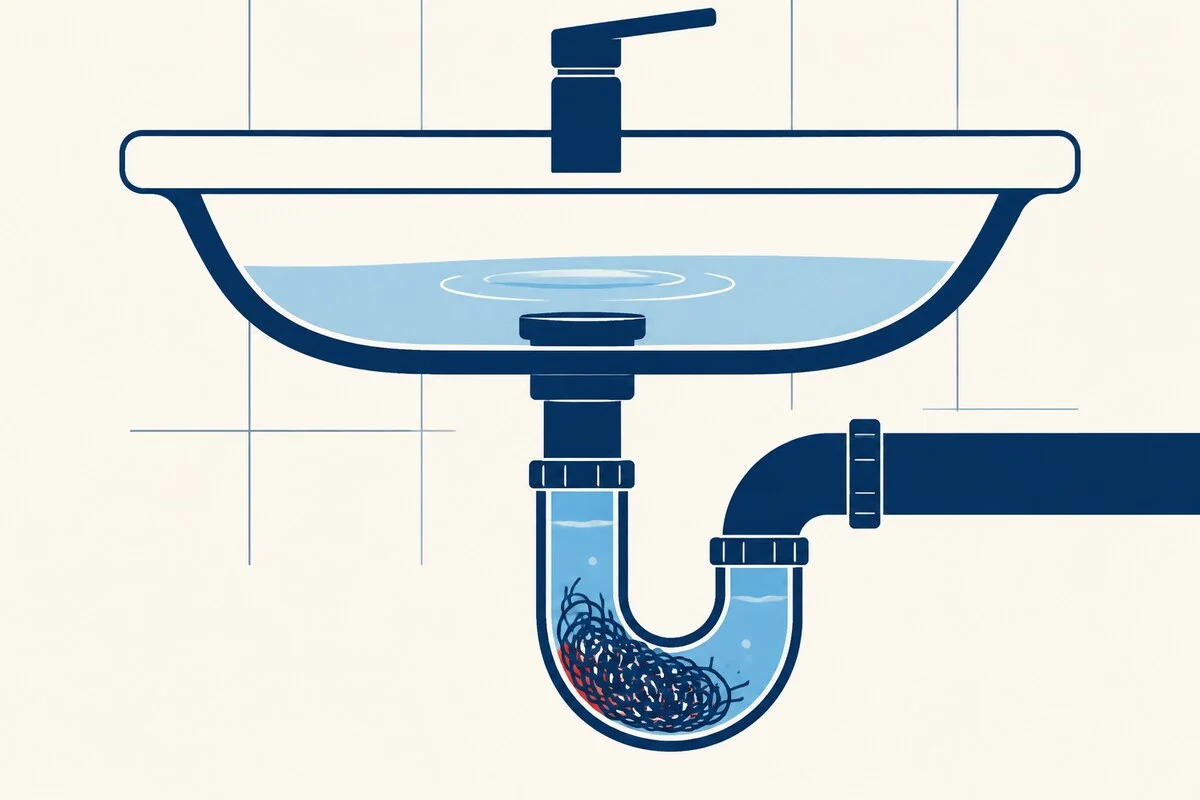
Short answer: If one sink, tub or shower is slow, it is usually hair, soap or grease close to the drain, and you can often clear it yourself. If several drains are slow at once, toilets gurgle or the basement floor drain backs up, the main line is the problem: buildup, tree roots or a damaged section. That needs a plumber, ideally with a camera.
The causes look the same from the sink and need completely different fixes. Working out which one you have first is what keeps you from paying for the same drain twice.

What is your slow drain telling you?
| What you notice | Likely cause | What to do |
|---|---|---|
| One bathroom sink or tub drains slowly | Hair and soap in the trap or stopper | Pull and clean the stopper, clean the trap |
| Kitchen sink slow, sometimes smells | Grease and food buildup | Plunge with the other side blocked. Call if it keeps coming back |
| Several drains slow, toilets gurgle | Partial blockage in the main line | Call. Avoid heavy water use until it is cleared |
| Water comes up the basement floor drain when you run water upstairs | Main line blocked | Stop using water everywhere and call |
| Comes back weeks after being snaked | Roots, a sag or a broken section | Camera inspection to see the cause |
The three main causes
- Grease and soap built up over years. It goes down warm, cools and coats the inside of the pipe until the opening is a fraction of what it was.
- Tree roots finding a joint or crack in an older sewer line. Common in established Calgary neighbourhoods with clay or cast iron lines and mature trees.
- A damaged or sagging section where the pipe has partly collapsed or settled, so waste sits instead of flowing.
Why does guessing cost you twice?
Pouring chemical cleaner or snaking the line might get things moving for a week. If the real cause is roots or a break, the blockage just rebuilds further down. That is how people end up paying for the same drain twice. Chemical cleaners also rarely clear grease or roots fully, and they make the line hazardous for whoever has to open it next.
When does a camera earn its keep?
For anything past a simple, obvious clog, a camera run through the line shows exactly what is happening inside the pipe: buildup, roots, a crack or a sag. The repair then targets the cause instead of buying a few more weeks. In Calgary, the sewer line from the house to the property line is the homeowner's responsibility, so knowing its condition matters, especially before buying an older home.
Safe to do yourself, and when to call
Safe to do yourself: cleaning sink stoppers and traps, plunging a single fixture, a hair-catching drain cover, and pouring water into unused floor drains so the trap stays sealed.
Call a plumber: when more than one drain is slow, toilets gurgle, the floor drain backs up, the clog keeps returning, or you smell sewer gas. If you have a finished basement and no backwater valve, here is why it is worth a look.
How to keep drains clear
- Keep grease out of the sink. Let it cool and scrape it into the garbage.
- Use hair catchers in showers and tubs.
- Only flush toilet paper. Wipes labelled flushable still cause clogs.
- Run plenty of water after using a garburator, and keep peels, rice and coffee grounds out of it.
Common questions
Why are all my drains slow at the same time?
When several fixtures slow down together, the blockage is usually in the main line that they all drain into, not in each fixture.
Are chemical drain cleaners safe for my pipes?
They are hard on older pipes and rarely clear the real cause. A plunger, a cleaned trap or a professional cleaning is the better route.
How do I know if roots are in my sewer line?
Recurring slow drains, gurgling and backups, especially with mature trees nearby, are the signs. A camera inspection confirms it.
Related guides
Ready when you are.
Tell us what is going on and the Northern Flame team will get back to you within one business day.
Get a Free Quote